
Category: minor 7 flat 5 m7(b5) chord

An Invitation to Improvise

Bronislaw Kaper’s “Invitation has fascinated jazz improvisers for decades. Few standards combine modal harmony, rapid key changes, unusual melodic intervals, and dramatic rhythmic possibilities quite like this one.

Rather than simply sharing a solo transcription, I’d like to offer ten improvisational strategies that will give you ideas you can apply to almost any tune.  To listen to Craig’s improv on the changes to “Invitation,” click on this MP3 player:

Click here to view a transcription of Craig’s improv.

Click here to watch the video on YouTube.

Continue reading “An Invitation to Improvise”
A Harmonic Minor Workout

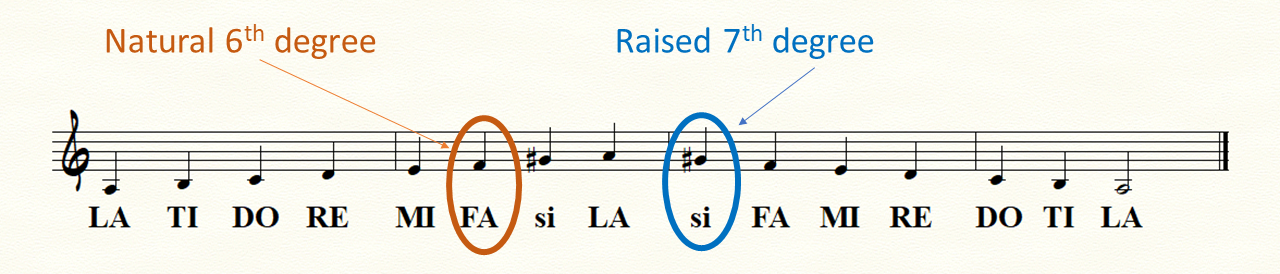
Pianist Dr. J. H. asked for a melodious exercise he could use to explore the harmonic minor scale in all 12 keys.  The “harmonic minor scale” features the natural 6th degree FA along with the raised 7th degree.  The raised 7th degree in a minor scale is the syllable known as “si” (pronounced “SEE”).  It’s also referred to as “#SO” or “#7.”   That scale is shown here:

Continue reading “A Harmonic Minor Workout”

I feel so much more like I do now than I did when I first got here.*

jazz-maze-1

CLICK HERE TO WATCH VIDEO

Jazz gigs seldom turn out exactly as we expect them to.  Since jazz is, by definition, an improvised art, this should come as no surprise.   It’s a maze which often thrills, sometimes shatters, and continually amazes us.

Let’s say, for example, that you arrive at the gig late, stressed, un-showered, and unready to perform.  It’s at this point that a fan drops a hundred dollar bill in the tip jar, Herbie Hancock asks to sit in, and your first solo provokes a standing ovation.  In your dreams, right?

The nature of jazz will, at times, lead to the unexpected, to exciting innovation, to surprise, to joyful discovery.  …Occasionally, it leads nowhere.  After all, life’s mazes do include blind alleys.  Just the same, we “press on regardless” (as my father often preached on rainy hikes), in search of the perfect note, aye? Continue reading “I feel so much more like I do now than I did when I first got here.*”

Stan’s Stella Sequence

Yesterday, I discovered a sequence in Stan Getz’s 1952 Clef recording of “Stella by Starlight,” (MGC 137). The three-by-three format unfolds as Stan finishes the bridge on his first chorus. Here it is:

If you’ve studied “Stella,” you know that the final 8 bar section of the form contains the intriguing 6-bar harmonic sequence shown below:

As shown here, that harmonic sequence features 3 iterations of 8 beats each, for a total of 24 beats. But Getz begins his amazing melodic sequence 2 beats before the passage shown above, so he needs to fill 26 beats.

The diagram below illustrates the incredible way he accomplishes this Herculean feat. Stan’s motif of six eighth-notes covers 3 beats and is repeated three times on each of three starting notes. But on the second iteration of round two, he leaves out a beat. Thus, the total episode comprises 9 + 8 + 9 = 26 beats. Even at 160 beats per minute, Getz is able to execute this monumental feat so smoothly that it sounds effortless.

Continue reading “Stan’s Stella Sequence”