
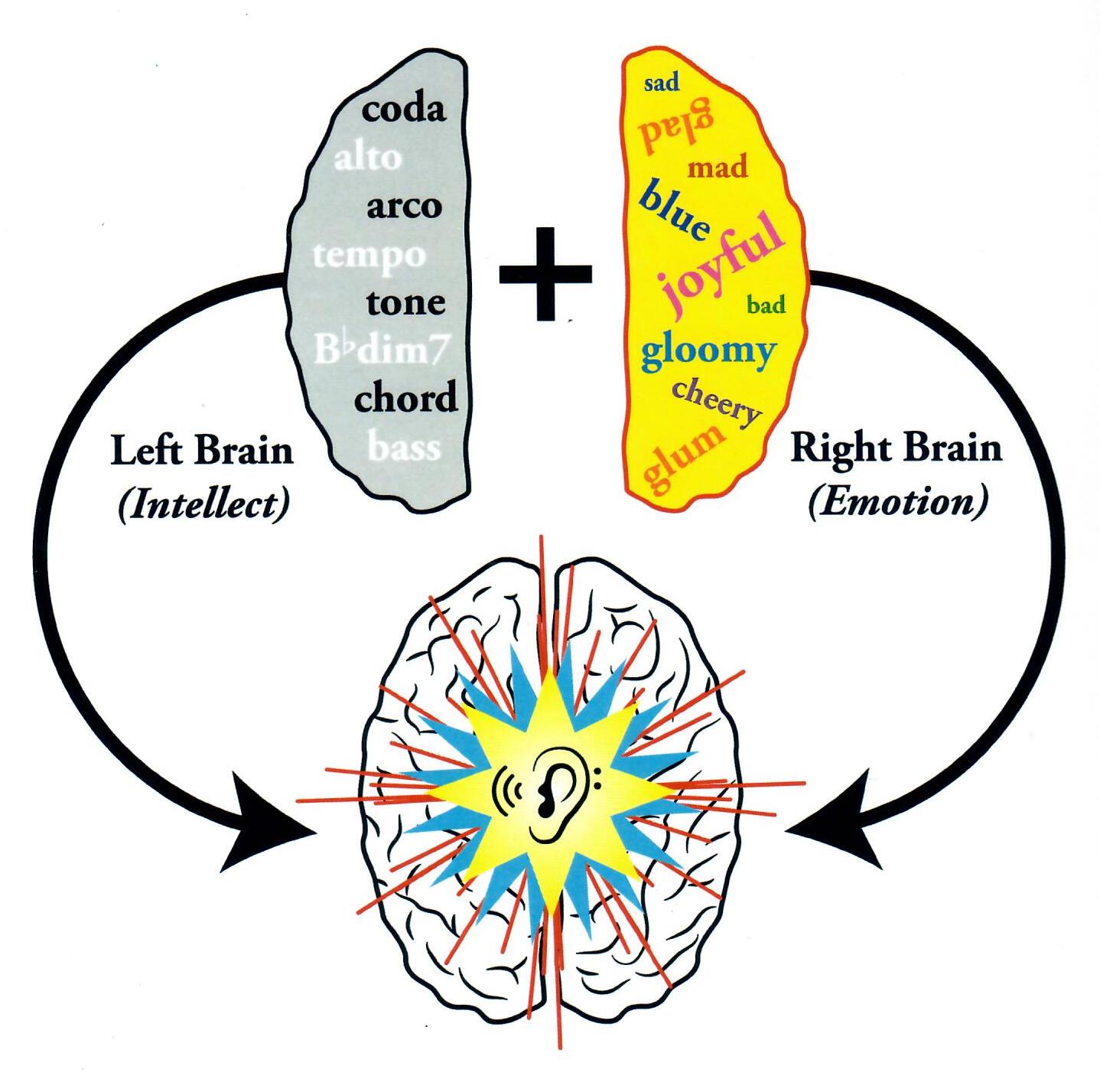
 “If you have a clear grasp of what you’re about to play, your notes will be skillfully executed, with conviction and authority. However, if your conception is muddled, your playing will be clumsy and unfocused.”
That astute observation by respected composer, recording artist, and educator Richard S. pretty well sums up my own goal as a teacher of improvisation.
However, there’s more than one way to conceptualize a musical phrase. Each may be correct and valuable. Which best propels your performance forward depends on your particular creative intention and your unique thought process.
During three decades as an improvisation coach, students sometimes bridle at the specific approach recommended by my book “New Ears Resolution.” Here are some concerns voiced by students:
- “To me, scales are best described with numbers. Using syllables adds extraneous cognitive load that hampers real-time improvisation.” — Andy G.
- “It’s too complicated to think of the key changing every couple of measures.” — Don T.
- “The key signature should not depend on the mode.” — Signe C.
- “I have perfect pitch. I don’t need numbers or syllables. To me, C# is just C#.” — John Z.
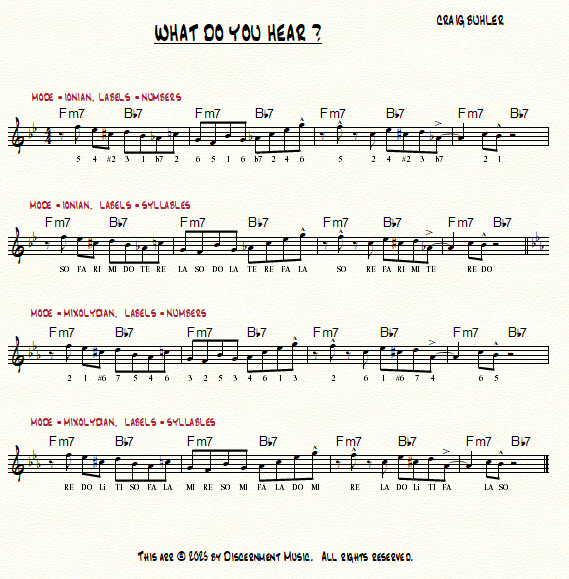
Below is a phrase I discovered while jamming yesterday. The phrase is followed by four different ways of understanding its context. Please let me know if one of these resonates with you, or if you hear it in an entirely different way.
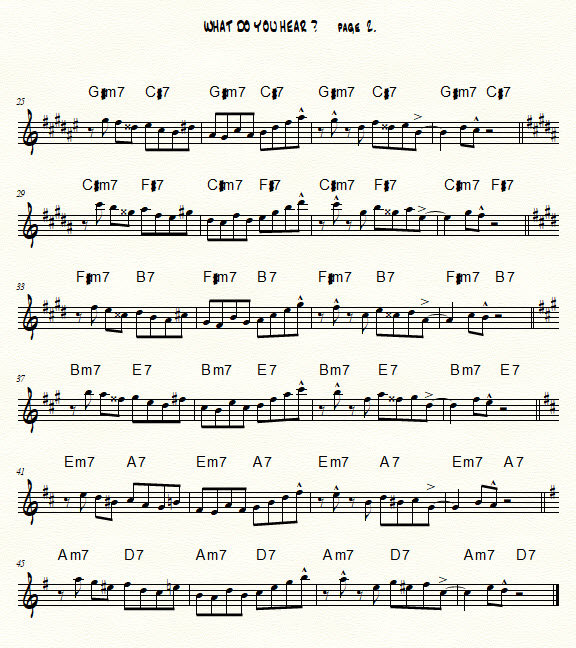
Below that, you’ll find a recording and chart of the phrase in all 12 keys, in case you’d like to woodshed. I find this a most effective way to improve chops and stimulate creative ideas. Many similar jazz phrases are offered in my new book “12 Keys to Improv” which comes with complete audio tracks.


 CRAIG BUHLER JAZZ
Reading this made me stop and think about how sound comes to us as something lived rather than just perceived. The way the author explores listening without technical jargon pushed me into my own experience of hearing rather than analysis.
What stayed with me was a quiet shift in perspective: not asking what we hear but how we hear, as if the act of listening itself were the subject rather than any particular sound. That nuance lingered after I finished reading.
LikeLike
My grandfather, Dr. Karl Buhler, authored a book entitled “Theory of Language.” The parts I’ve read are concerned primarily with our methods of communicating among each other (parts of speech, syntax, etc.). By contrast, I am fascinated with how each of us conceptualizes the music we hear inside our own minds. We do not all hear in the same way. If I could “get inside” the mind of my student, it would make me a more effective teacher. Scientists say plants thrive when Mozart’s music is piped into greenhouses. Why is that?
LikeLiked by 1 person